The Virtual Employee as a New Kind of Colleague
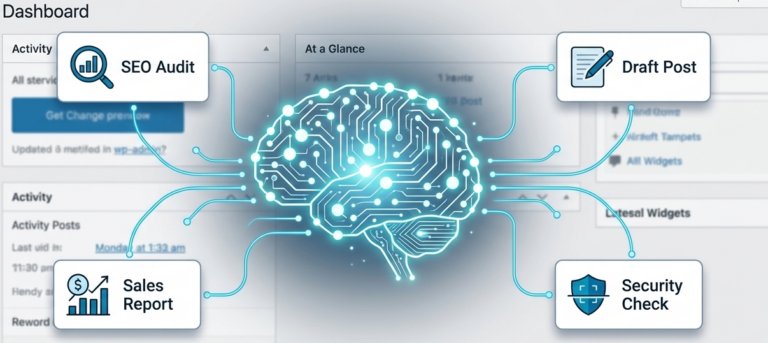
Beyond GenAI (Generative AI), that makes possible to generate text, images and videos from a textual or visual description, in recent months we have seen a surge of what is known as Agentic AI, which refers to systems that do not just respond, but act.
They take initiative within a defined scope, carry out sequences of tasks, and deliver results, often with little to no human intervention once they have been properly set up and guided.
Unlike a simple chatbot that answers questions from a script, a virtual employee can reason, plan, retrieve information, draft documents, process data, follow multi-step workflows, and adapt to changing instructions – much like a human employee would.
What We Are Building
Our experimental technology, a refined Agentic AI development developed using the Rust programming language, is undergoing testing of a few implementations of virtual employees, such as: Virtual Assistant Employee, Virtual Marketer and Virtual Accountant.
The agents are customizable and easily adapted to different requirements.
The virtual employee goes beyond just technical skills, and rather than replacing a real life employee or service provider, it is intended to be a complement that results in an increase in productivity and skill level of its counterpart.
Technology always has been an unstoppable force, and in the long run, in most cases, a force for good. While disruptive in the short term, we must embrace it rather sooner than later, and use it in ways that benefit us, enhancing productivity, complementing skills, and leading to new and greater opportunities.