An Overview of Flutter’s Mobile App Tech Stack
Creating Mobile Apps for iOS and Android with Flutter
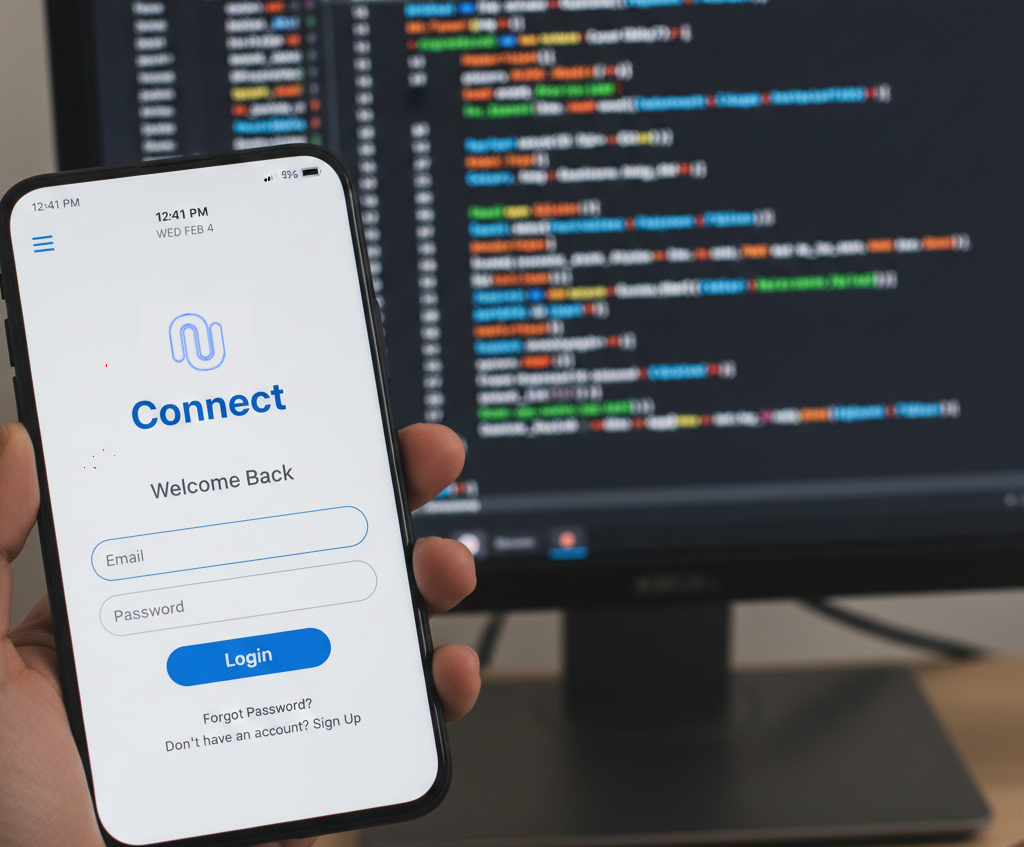
Flutter is Google’s open-source UI toolkit for building natively compiled mobile applications for iOS and Android from a single codebase using the Dart language. In this first post of our Tech Stack Series, we outline when Flutter is a strong choice, its architectural strengths, and common backend and database pairings to round out a production-ready mobile stack.
Why Flutter
- Single Codebase: Write and maintain one codebase, but ship simultaneously to iOS and Android.
- Consistent Pixel-Perfect UI: Flutter renders its own widgets; visual differences between platforms are minimized and design systems stay tighter. Nevertheless, you can still achieve, for instance, a typical iOS look using Flutter’s Cupertino library.
- Performance: Compiled ahead-of-time (AOT) to native code in production; so no overhead due to JavaScript bridge like in some other cross-platform approaches.
- Rich Widget Ecosystem: First-party Material and Cupertino libraries plus thousands of community packages (animations, charts, localization, accessibility helpers).
- Hot Reload / Fast Iteration: Near-instant UI refresh after a change, during development, accelerates design, prototyping, and debugging.
- Strong Tooling: Integrated DevTools suite (layout inspector, performance timeline, memory profiler) + VS Code and Android Studio extensions.
Some of its Architectural Strengths
- Declarative UI: Removes the need to manually create UI elements, state management solutions (Provider, Riverpod, Bloc, MobX) integrate easily, rebuilds are simpler, code is more readable, and productivity increases.
- Layered Rendering: Skia engine gives control over pixels, supporting advanced custom graphics and smooth 60fps animations, and ensures high performance and efficient updates by repainting necessary parts of the UI, rather than the entire screen.
- Predictable Theming & Responsiveness: Device-specific quirks (fonts, paddings) are less burdensome; adaptive layout widgets help scale to tablets and foldables.
- Dart Language Ergonomics: Strong typing + async/await simplifies concurrency; isolates enable background computation, without blocking the UI thread.
Popular Backend & Service Pairings
Selecting a backend depends on product complexity, team skill, compliance needs, and time-to-market goals. Here are some common choices:
Backend-as-a-Service (Fast MVP / Iteration)
- Firebase: Realtime Database or Firestore, Authentication, Cloud Functions, FCM push notifications, App Check, Remote Config.
- Supabase: PostgreSQL with row-level security, auto-generated REST & GraphQL, authentication, edge functions.
- AWS Amplify: A comprehensive set of tools, including among other GraphQL (AppSync), Dynamo DB, Cognito Auth, File Storage (S3), serverless functions via Lambda, analytics.
Custom Backend (Flexibility / Domain Logic)
- Node.js / Express or NestJS: Rapid API development; supports REST, GraphQL (Apollo), WebSockets.
- Go (Gin/Fiber): Efficient concurrency for high-throughput APIs.
- Python (FastAPI): Fast dev cycle with automatic OpenAPI schema generation.
- Rust: Robust backends with efficient concurrency.
- Java/Kotlin (Spring Boot): Enterprise ecosystems, explicit domain layering.
Databases & Storage
- PostgreSQL / MySQL via hosted services (Neon, PlanetScale, RDS) for relational integrity.
- MongoDB or Document Stores when schema flexibility matters.
- Redis for caching sessions, rate limits, ephemeral data.
- Object Storage (S3, Cloud Storage) for media, assets, and generated content.
- Edge KV / Durable Objects (Cloudflare, Fastly) for low-latency configuration and session state.
Summary
Flutter provides a productive, UI-centric, performant path to creating robust iOS and Android mobile apps from one codebase. Combined with managed backend services (Firebase, Supabase, Amplify) or a custom API layer (NestJS, FastAPI), it forms a tech stack that scales from MVP to growth stages.